
Eastwood Forest
Water damage restoration in Eastwood Forest, Maple Valley
Eastwood Forest is one of Maple Valley’s smaller neighborhoods, north-west of Elk Run and south-west of Cherokee Bay. Many of its houses have had more than one owner, and that history is part of how water damage tends to show up here.
Tell us what’s changed in the house and we’ll help you narrow it down.
Something Smells Damp? Call Us- Phone answered 24/7
- Emergency response
- Upfront pricing before work begins
- No hidden fees
- Straight answers on the phone
- Crews who know Cedar River valley crawl spaces
The neighborhood
A settled neighborhood with a known history
Eastwood Forest is small and quiet, with tree-shaded lots and houses that have been lived in for a good while. When a house has had several owners, it often has a mix of parts: some original, some replaced, and some replaced by someone who didn’t leave a note.
That’s why a lot of calls from here start with something vague. A room smells damp. The water bill is higher than it was. A floor near the bathroom feels a little soft. Nothing is obviously wrong, but something has changed.
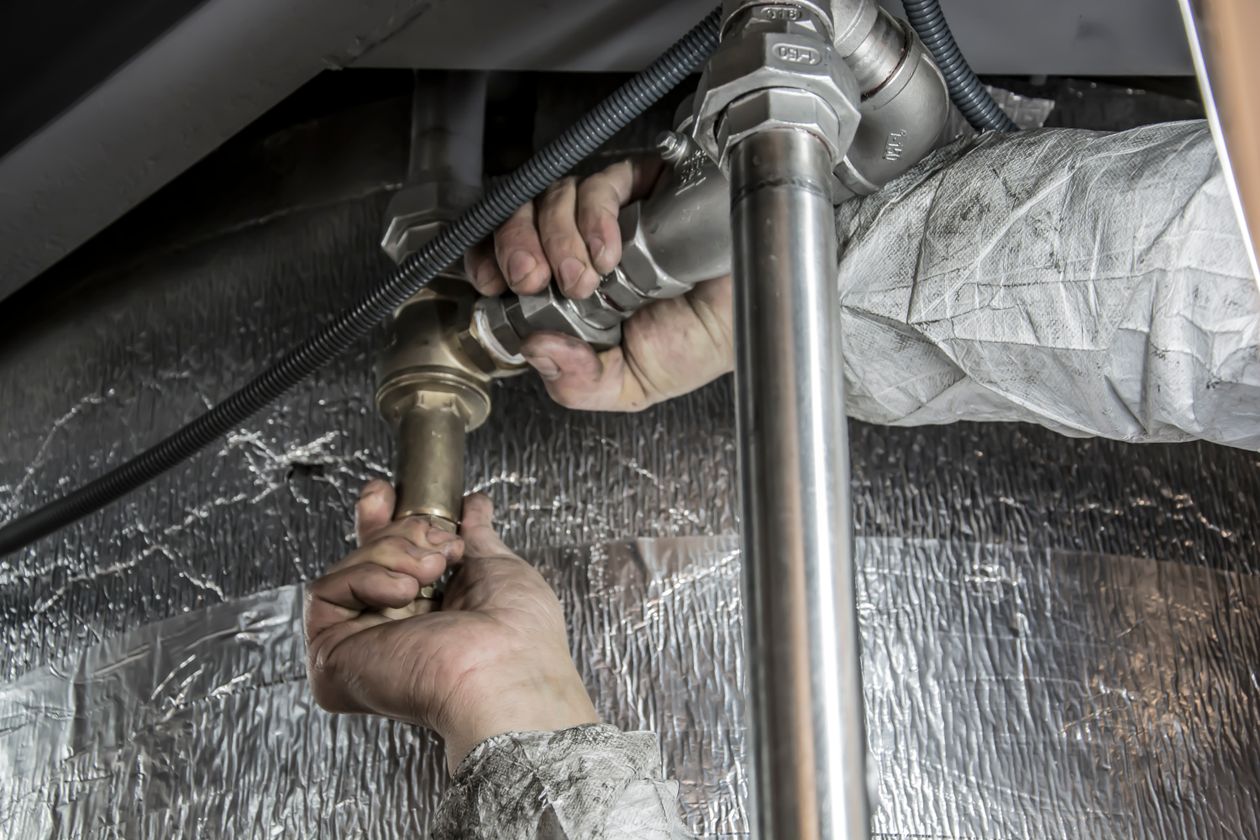
Fixtures with a past
What to look at in a house that’s changed hands
Original shutoff valves
Older plastic or compression shutoffs under sinks can stiffen or crack. If one won’t turn, it won’t help in an emergency.
Mixed supply lines
A house can have braided lines, plastic lines and older rigid connectors all at once, each at a different age.
Water heater age
Check the label for the manufacture date. If you don’t know when it was last replaced, it’s worth finding out.
Toilet seals
A rocking toilet or a soft spot around its base usually means the wax seal has been leaking into the subfloor.
Crawl space condition
Insulation that has dropped, a vapor barrier that has been torn by past work, and debris left behind by previous repairs.
Not sure what you’re looking at under the sink? We’ll help.
Not Sure What You’re Looking At? Call UsBuying or selling
Before you sell, or after you buy
Water history matters when a house changes hands. If you’re about to sell, a moisture check can confirm that an old leak was dried properly rather than just painted over. If you’ve just bought, it’s a good time to learn where the shutoffs are, how old the water heater is, and what the crawl space looks like.
A moisture inspection focuses on water: readings in walls, floors and ceilings, and a look under the house. It isn’t a home inspection for a sale, but it answers the question of whether anything is still wet.
Ask what a moisture check would involve for your house.
Ask About a Moisture CheckA slow leak
Tracking down something you can’t see
Watch the meter
Turn off every fixture and look at the water meter. If it moves, supply water is escaping.
Follow your nose
A smell that is strongest in one room, closet or at the crawl space access narrows the search.
Feel the floors
Soft or cool spots near a bathroom, kitchen or laundry are worth pointing out to the crew.
Leave the opening-up for later
Readings and a thermal camera usually narrow it down before anything is cut.
If you do find water, the first steps are the same as anywhere: stop the source, keep clear of wet electrics, and photograph what you see. See finding leaks under the floor for how hidden leaks are found.
Time and cost
What affects the time and the price
Finding a slow leak is often quick once meters are on site. What takes the time is drying whatever it soaked: a subfloor, the bottom of a wall, insulation under the house.
Price depends on how long the leak has been running, how much material needs removing, whether the crawl space is involved, and the repairs. You get the price before work starts.
Know the cost before anything is opened.
Get the Price Before We StartUnder the house
Crawl spaces after past repairs
Every plumber, cable installer and pest technician who has been under a house leaves a little behind. In houses that have had several owners, crawl spaces often show it: vapor barrier pulled aside and never put back, insulation pushed out of place, old pipe offcuts, and patches where someone tracked in mud.
None of that is a crisis. It does mean the crawl space is less able to handle a leak or a wet winter. A look underneath, and putting the vapor barrier and insulation right, is a sensible step whether or not anything is leaking. See crawl space drying and insulation removal.
Services for wooded-lot homes
Also close to Eastwood Forest
Questions
Eastwood Forest questions
Turn everything off and watch the meter. If it moves, water is escaping somewhere, often under the floor or inside a wall. A crew can trace it with meters and a thermal camera.
A slow leak nearby, a toilet seal, or damp coming up from the crawl space are the usual causes. The smell is usually strongest closest to the source.
If they won’t turn easily or they drip after you turn them, yes. They’re your first line of defense in a leak.
Find the main shutoff, check the water heater’s age, look under sinks and behind toilets, and have a look at the crawl space or have someone check it.
It can confirm that past leaks were dried properly, which is useful information for you and a buyer.
Often it means the seal has been leaking into the subfloor. Have the floor checked before resetting the toilet.
Usually, yes. Before-and-after photos and the drying log show where the water went and when materials reached normal levels. The crew can send them to you when the job is finished.
Often several days, because slow leaks soak deep into subfloor and framing. Readings show when it’s done.
If the house has had several owners and you don’t know when anyone last looked, yes. A torn barrier or fallen insulation is easier to fix before it gets wet.
Find the main shutoff, check the water heater’s age, and look under the sinks and in the crawl space. Replace any supply lines or shutoffs that look tired.
Something not right in your Eastwood Forest home? Call and we’ll help find it.
Tell us what’s changed. A local crew traces the water, dries what it reached and puts it back together.
Practical help, and a clear price before work begins.
Call Now: (425) 380-0163