Crawl space water damage
Standing water, sagging insulation and wet framing under the floor, found and dried out.
Maple Valley · Cedar River valley · 24/7
Water under the floor, a stain spreading across the ceiling, a smell downstairs that wasn’t there last week. We connect Maple Valley homeowners with experienced local restoration crews who find the source, dry the structure properly and put it back together, with upfront pricing before any work begins.
The line is answered 24/7 by someone who can talk you through the next hour.
Call Now: (425) 380-0163Serving Maple Valley (98038) and nearby communities from Renton to Enumclaw, Vashon and Snoqualmie Pass.
If water is coming in now
These steps are worth doing before anyone arrives. None of them needs tools you don’t already own.
In many Maple Valley homes the main shutoff is in the garage near the water heater, or where the supply line enters the house. Turn it clockwise. For a single fixture, the angle stop behind the toilet or under the sink shuts off just that line.
If water is near outlets or panels, do not enter. Call your utility and emergency services.
Wide shots of each room, close-ups of the source and anything damaged. Photographs and written notes of what happened and when are generally useful later.
Get rugs, electronics and anything with a cardboard base off wet floors. Slip foil under furniture legs so stains don’t transfer into damp carpet.
It sounds backwards, but from autumn through spring the air outside here is often wetter than the air inside. Opening windows usually slows drying down rather than helping.
If the leak was under the floor or inside a wall, the visible part is usually the smallest. Materials keep absorbing after the flow stops, so drying time matters.
Can’t find the shutoff? We’ll stay on the line while you look.
Call and We’ll Walk You Through ItHow this works
Maple Valley Water Damage Relief is a referral service. You tell us what you’re seeing and where, and we connect you with an experienced independent restoration crew that works in the Cedar River valley. The crew assesses the damage, explains what they found and gives you pricing before any work begins. You’ll get straight answers on the phone, including when something sounds minor enough to handle yourself.
Services
Most calls here start under the floor or outside the foundation.
Standing water, sagging insulation and wet framing under the floor, found and dried out.
For when the wet season pushes water toward the foundation, rather than a pipe letting go.
Tracing a hidden supply or drain leak from a smell, a soft spot or a high water bill.
Dehumidifier-led drying for framing and subfloor in a climate that rarely helps.
Supply line, fitting and angle-stop failures, from the first call through to repairs.
Garage and closet water heaters that have started to seep or have failed outright.
Water from clogged gutters, short downspouts and silted drains that finds its way inside.
Containment, removal of affected materials and confirmation that the structure is dry.
The question we hear most
Water under a house here has two very different causes that need different fixes. A leak comes from the house’s own supply or drain lines. Groundwater comes from outside: months of rain saturate the soil, the water table rises, and water moves toward the lowest point it can reach, often the crawl space or a daylight basement wall.
Turn off every tap, the dishwasher, washing machine, ice maker and any irrigation. Find the water meter, usually in a concrete box near the street, and note the reading or watch the small leak-indicator dial. Wait ten minutes without using any water. If the reading has changed or the indicator is turning, water is going somewhere it shouldn’t, and a supply-side leak is likely. On a private well there’s no meter; listening for the pump cycling with everything off tells you something similar.
The test only covers the pressurized supply side; a cracked drain line leaks only when something drains, so it won’t move the meter. And it’s common to find both at once, which is why a crew checks moisture patterns and plumbing together.
Describe what you’re seeing and we’ll help you work out which it is.
Not Sure What You’re Looking At? Call UsUnder the floor
A large share of homes around Maple Valley sit over a crawl space rather than a basement. Supply lines and drain runs live down there, and a leak can run for weeks without anyone seeing a drop.
Standing water on or under the vapor barrier. Soaked fiberglass batts sagging out of the joist bays or lying on the ground. Damp joists and subfloor, sometimes with visible growth. A vapor barrier that’s torn, displaced or was never sealed properly.
Crews go in through the access hatch, often in a closet floor or an exterior foundation opening, and work on their backs in a space that may be two feet high or less. Standing water is pumped out, wet insulation is bagged and removed, and damaged vapor barrier is pulled back. Dehumidifiers and air movers run under the floor while joists and subfloor are measured until they reach normal levels.
It takes longer than a visible spill. The space is enclosed, the soil beneath is often damp in its own right, and framing gives up moisture slowly. New insulation and vapor barrier go in only once the structure is confirmed dry.
Crawl space water damage · Crawl space drying and insulation removal
Checking under the floor is routine work for the crews we connect you with.
Musty Smell Downstairs? Call Now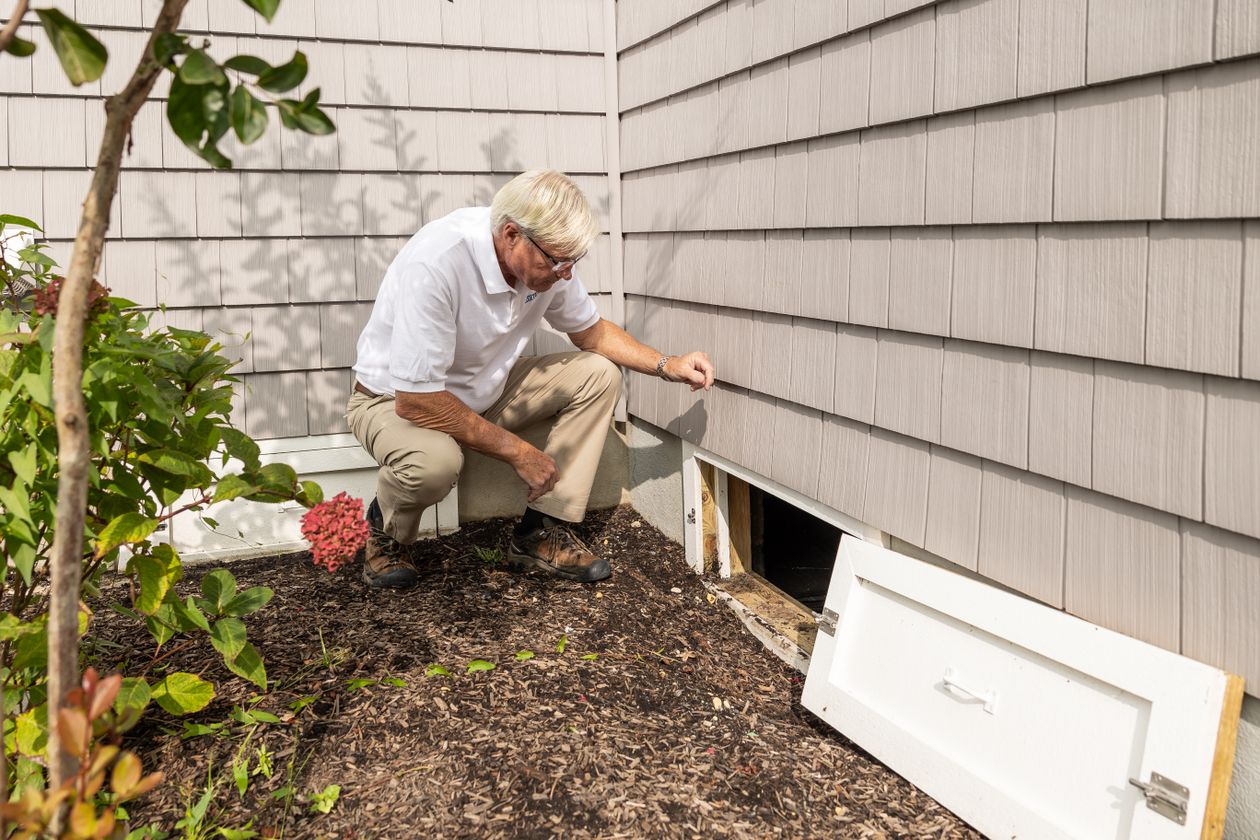
Local conditions
The same leak behaves differently in a wet, wooded valley. These conditions shape most jobs here.
From autumn into spring, steady rain keeps the ground saturated for weeks. Water sits against foundations and finds low points under houses, which is why crawl space and daylight basement problems cluster between October and April.
Wooded lots mean needles and leaves in the gutters every season. A blocked gutter spills at the foundation, a short downspout soaks the soil beside the wall, and a silted French drain stops working. A lot of what looks like plumbing trouble starts outside.
Much of Maple Valley went up from the 1990s onward, so the usual culprits are supply lines, angle stops, washer hoses, ice maker lines and ageing water heaters, not the corroded galvanized pipe of older housing closer to Renton, Kent and Auburn.
Lowland winters here are usually mild, so pipes in crawl spaces, garages and exterior walls often aren’t protected. When a sharp cold snap does come through, burst pipes follow, sometimes days later when the thaw lets water run through a split line.
The area we serve runs from Maple Valley to Enumclaw, the Snoqualmie Valley, Vashon Island and up to the Pass. Travel time varies a lot across it, and island jobs depend on ferry sailings. We’ll tell you honestly what to expect.
What happens after you call
Every job is different, but the work follows the same five stages. Knowing them makes it easier to follow what the crew is doing and why it takes the time it does.
The crew finds the source, maps where water has travelled with moisture meters and, where useful, a thermal camera, and photographs conditions. You get pricing before work begins.
Standing water comes out with pumps and extractors. Every gallon removed as liquid is one that doesn’t have to be dried out of the air later.
Dehumidifiers pull moisture from the air while air movers keep it flowing across wet surfaces. Saturated insulation, some carpet pad and swollen particleboard are removed.
Readings are taken at the same points at intervals and equipment is adjusted as areas dry. Drying ends when the readings say so, not when the room feels dry.
Once the structure is confirmed dry, damaged materials are replaced: insulation, vapor barrier, drywall, flooring, trim and paint. This may be the same crew or a separate repair phase.
In a dry climate, moving air does much of the work. Here, outside air is often near saturation for months and the ground under a crawl space stays damp, so dehumidifiers carry most of the load and opening windows can make things worse. A room can feel dry while the joists underneath still read well above normal, which is why the crews we connect you with measure rather than guess.
You’ll hear what the work involves and what it costs before anything starts.
Call for Upfront PricingAreas
Our focus is Maple Valley and the SR-169 corridor, with local crews across the surrounding towns, the rural fringe, Vashon and the Cascade communities.
Homes around the lake and park, from suburban streets to semi-rural lots.
Established tree-lined streets between Lake Sawyer and Lake Wilderness.
A private-lake community with its own clubhouse and parks.
Waterfront and near-water homes to the south, toward Black Diamond.
Older town streets, new build-out and rural lots on wells and septic.
An unincorporated rural community with long private roads.
Older and more varied housing, including condos and multi-unit buildings.
Island jobs, scheduled around ferry sailings.
Cabins and second homes at elevation, with real winters.
Questions
It depends on where you are, the time of day and how busy crews are. Maple Valley and the SR-169 corridor are the closest part of the area we serve. Vashon Island depends on ferry sailings, and Snoqualmie Pass and Baring are a long drive, particularly in snow. We’ll give you an honest idea of timing when you call rather than a promise nobody can keep.
The crew can provide photos, moisture readings and written notes on what they found and the work performed, so you have a clear record for your own files.
Most structural drying runs for several days, and crawl spaces, hardwood and framing often take longer. High outdoor humidity and damp ground slow things down here. The crew measures moisture at fixed points and finishes when those readings are back to normal for the material, so the readings set the timeline rather than the calendar.
It depends on how much water there was, what it soaked into, how long it sat, how hard the area is to reach and what needs replacing. The crew explains the work and gives you pricing before anything begins, with no hidden fees.
For a small, fresh spill on a hard floor, often yes. Once water reaches carpet pad, drywall, insulation or the crawl space, fans mostly move damp air around, and a dry-looking surface can sit over wet subfloor that later causes odor, mold growth and flooring damage.
Not necessarily. Moisture left in building materials can allow mold growth, commonly within a day or two under the right conditions, which is why prompt drying matters. Where growth has already started, affected materials are contained and removed and the area is dried and checked. If you have health concerns, please speak to a medical professional.
No. We’re a referral service. We connect you with experienced independent local restoration crews, and they perform the work. Their pricing is explained and agreed with you before any work begins.
Yes. Vashon jobs are scheduled around ferry sailings, and because drying runs over several days the equipment stays on the island for the duration. Snoqualmie Pass and Baring are mountain communities with real winters and a lot of seasonal property, and getting there takes time.
Yes. The line is answered 24 hours a day, every day, including holidays. Describe what you’re seeing and you’ll be told what to do first and how soon a local crew can come out.
Your address, where the water is and roughly how long it has been there, whether it’s clean water, gray water or from a sewer line, and whether the source has been shut off. Photos help the crew but aren’t required.
Tell us what you’re seeing. We’ll help you make sense of it and connect you with a local crew if you need one.
A calm, straight answer about what’s happening and what comes next.
Speak With Someone Local